Foundation Repair in Sammamish

Sammamish Foundation Repair takes on four kinds of foundation work for houses in and around Sammamish: water collecting at the foundation, cracks in concrete walls, a house that is settling and floors that sag over a crawlspace. Each job starts by working out what the foundation is doing, since a repair has to follow the cause and not just the symptom.

Sammamish is a young city as housing goes. About 54 percent of its homes date from 1980 to 1999 and a third from 2000 or later, with 1994 as the median year, so a visit here starts from the drainage around the foundation, the wall itself and the lie of the lot. Issaquah and Fall City are covered too.

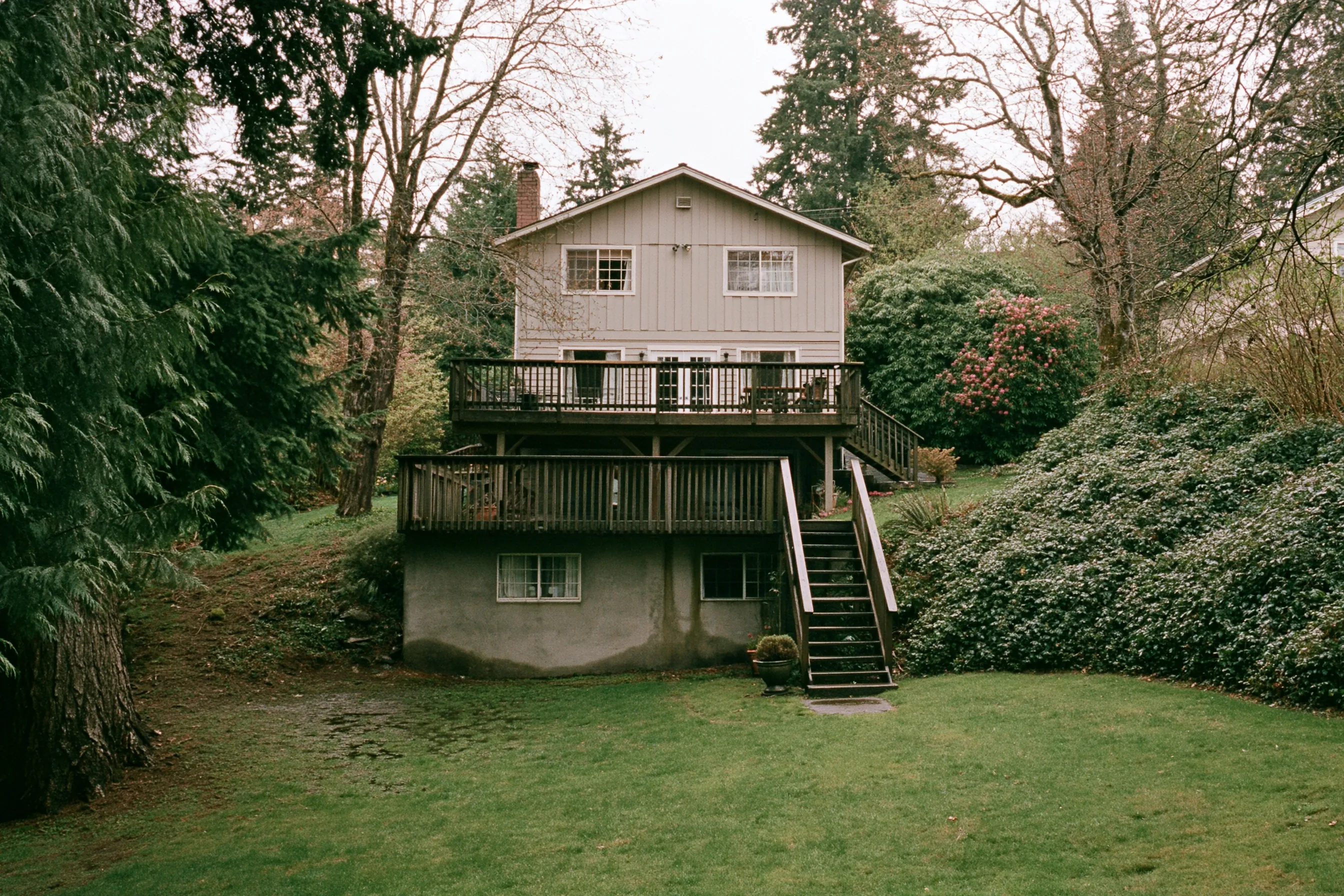
Rear of a two-story house on a gentle slope with a daylight basement, a poured concrete wall visible at the lower level, a deck above, wet lawn and Douglas firs
Foundation drainageFoundation crack repairFoundation settlement and pieringCrawlspace post and beam repair

Our foundation repair services

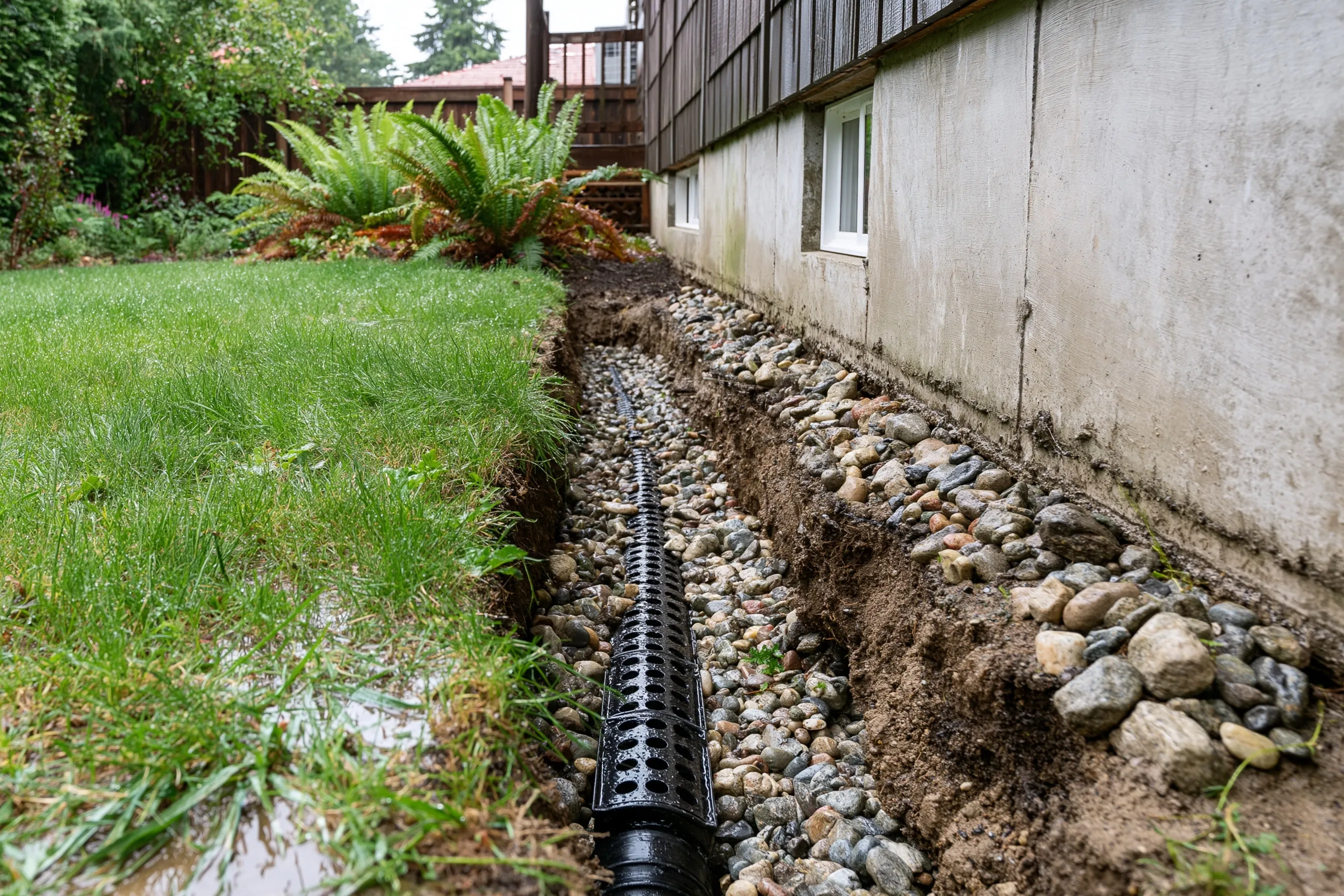
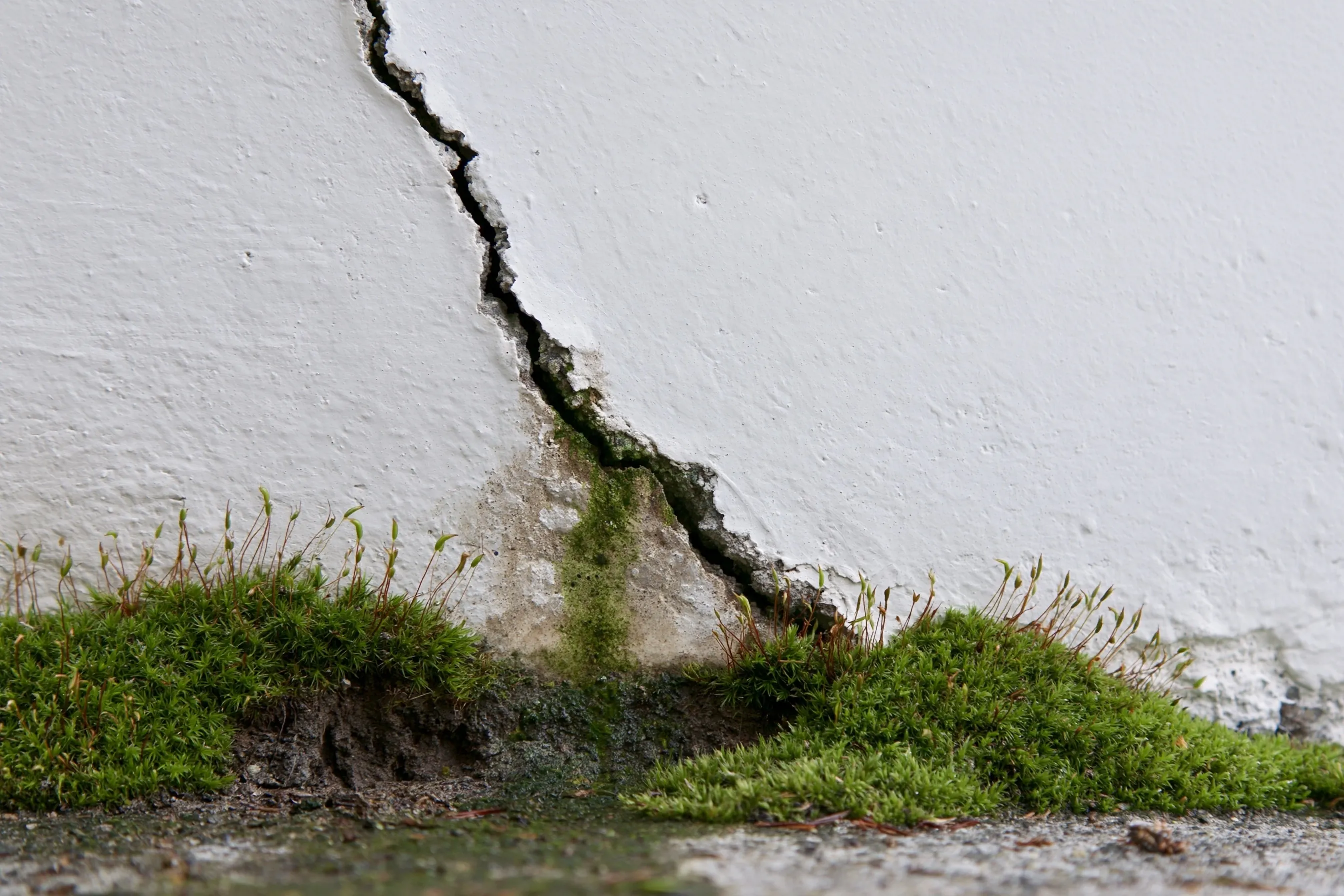
Narrow trench along the outside of a concrete foundation wall with a perforated drain pipe laid in clean washed gravel at the footing level, wet green lawn and sword ferns beside the trenchClose-up of a diagonal hairline-to-medium crack in a painted poured-concrete foundation wall of a Pacific Northwest house, moss at the soil line and a damp stain below the crack

Foundation drainage

Water at a foundation moves soil and presses on walls. The first job is to find where it comes from, whether the roof, the grade or the ground, and then to look at gutters, downspout connections, grading and the footing drain. The plan follows the source, so it can run from a downspout extension to a drain at the footing.

Foundation crack repair

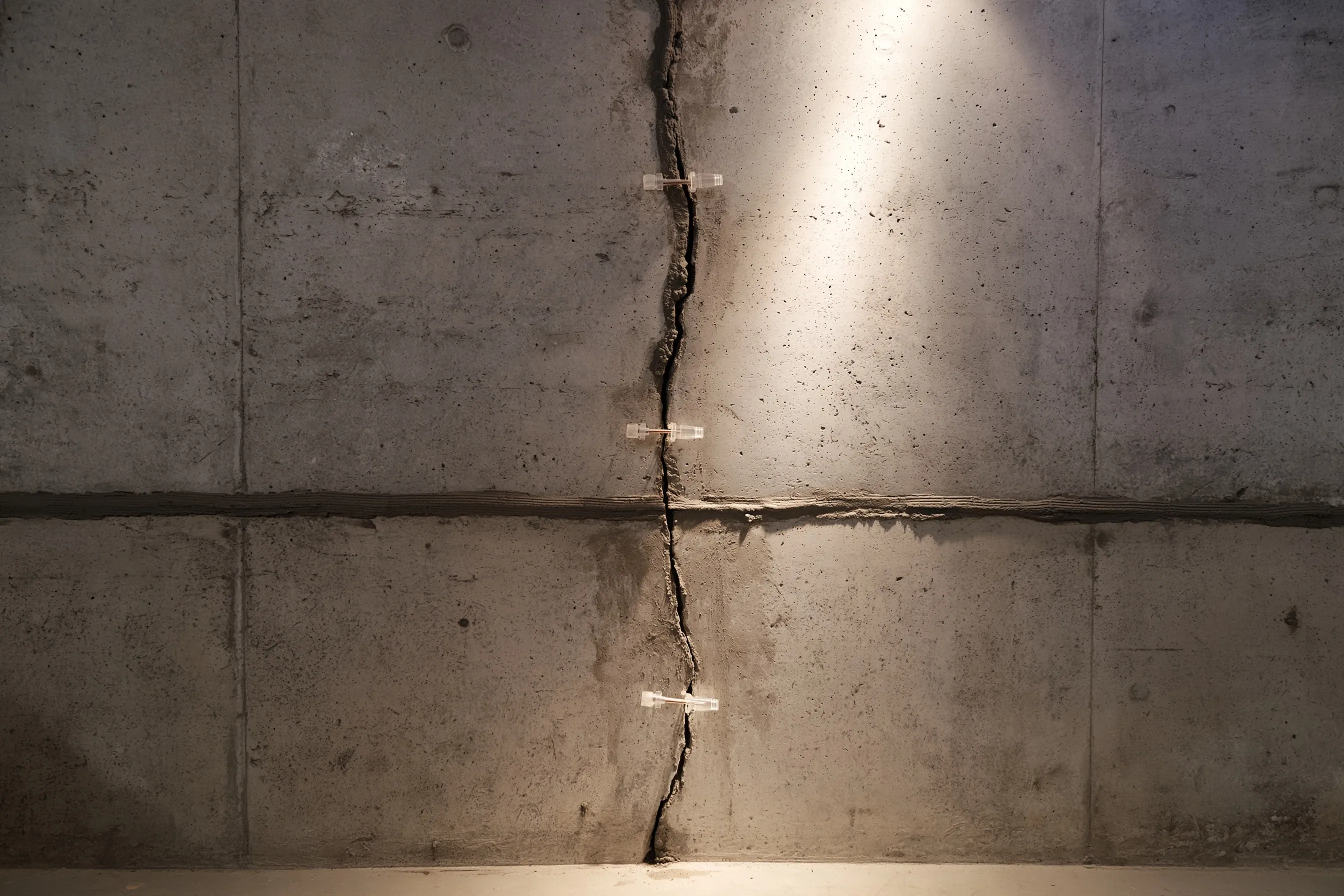
A crack in a poured concrete wall may be a shrinkage line or a sign that the wall is moving. HUD’s inspection guide calls shrinkage cracking rarely serious and says a crack that tapers can point to differential settlement. Width, direction and any change over time are checked before sealing is chosen.

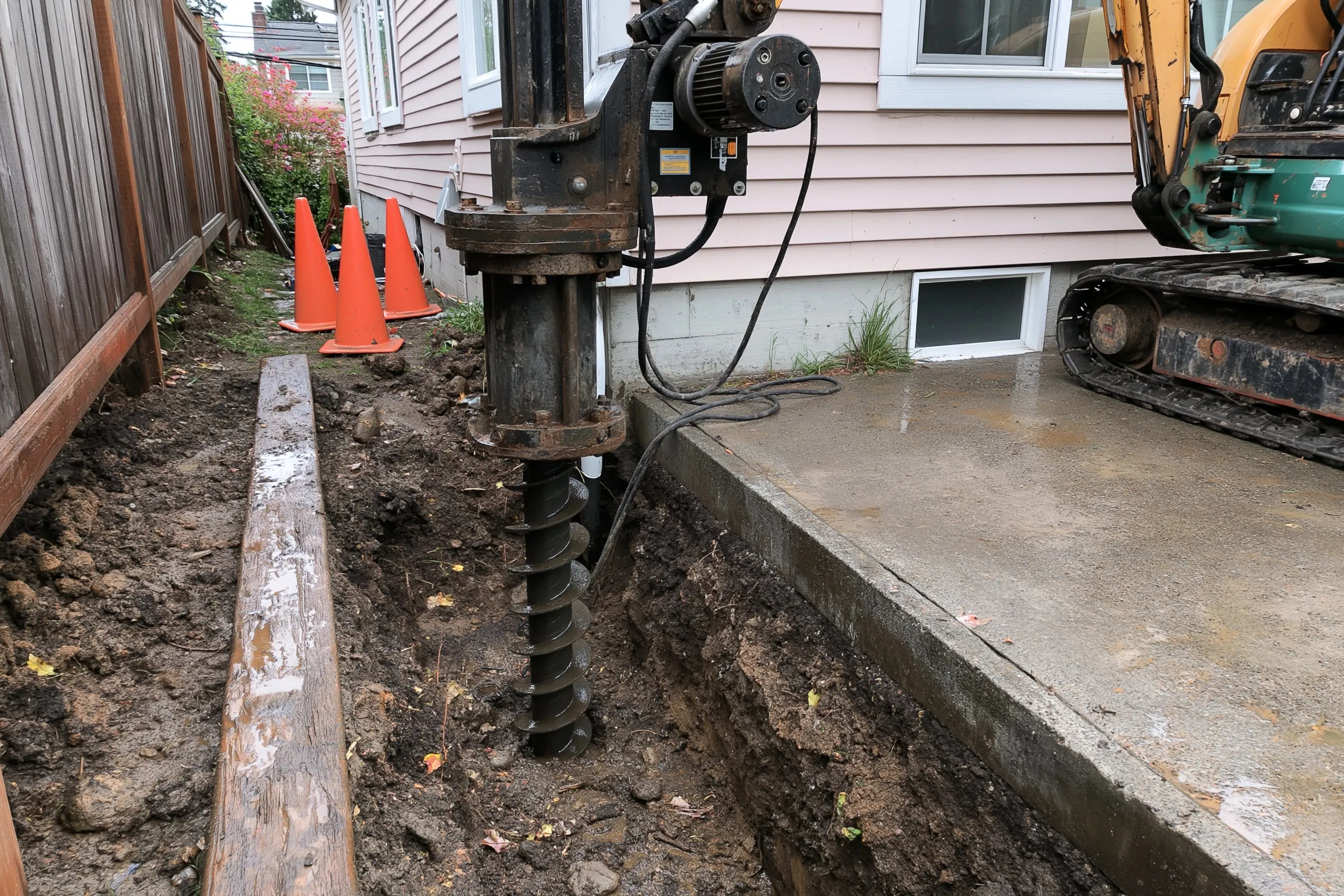
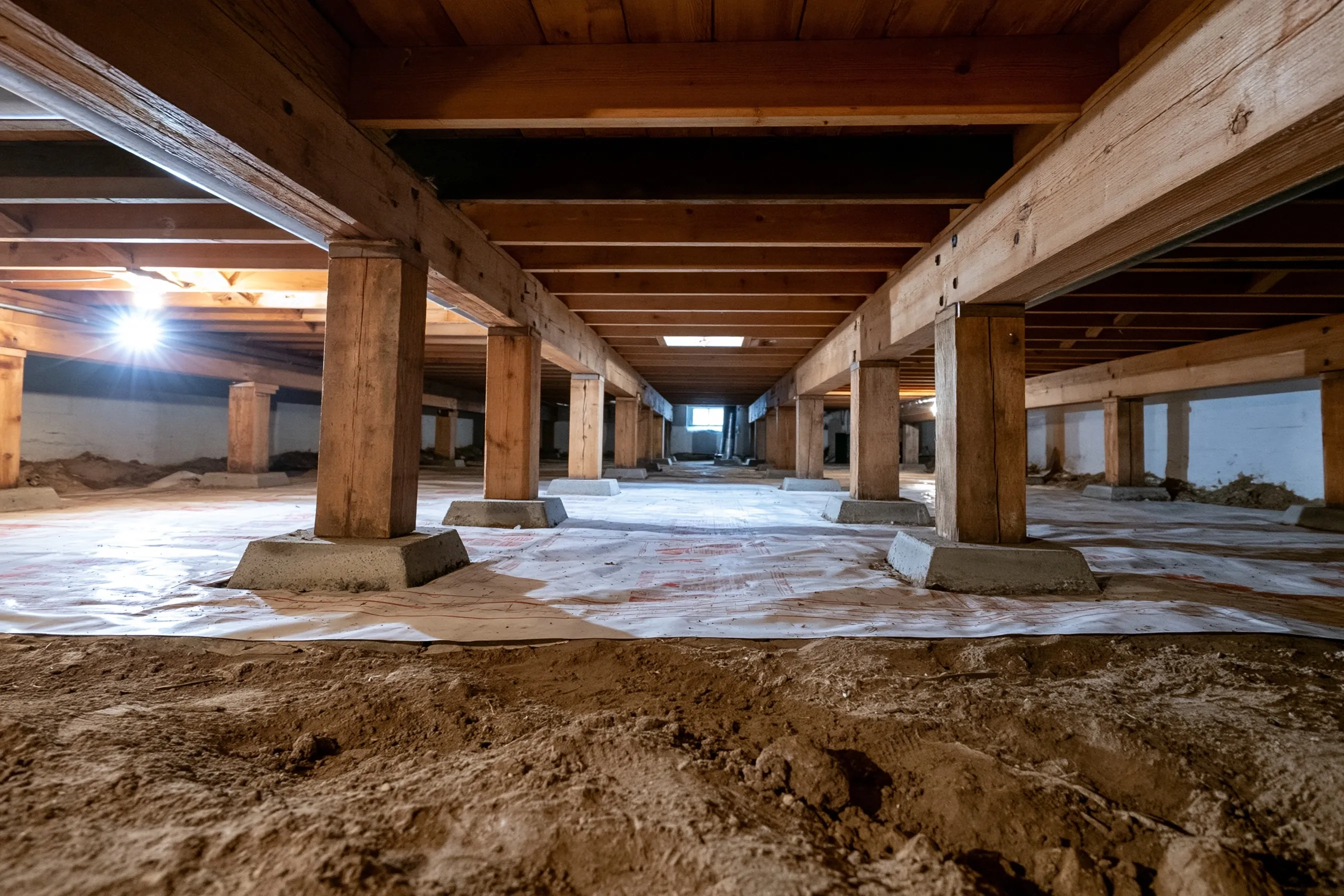
Hydraulic drive head and torque motor on a small compact excavator beside a house foundation, a steel helical shaft being turned into a narrow trench beside the footing, wet Puget Sound soil and orange conesLow-angle view inside a residential crawlspace under a Pacific Northwest house: a row of timber posts on concrete pads holding wood girders and floor joists, bare soil partly covered by a vapor barrier, lit by a flashlight beam

Foundation settlement and piering

A floor that slopes, a door that will not latch and a crack at a window corner may all trace to a footing that is moving. Steel push piers and helical piers carry a footing on deeper ground, and each depends on what that ground can bear. Lifting a house back to level is not promised.

Crawlspace post and beam repair

Bounce or slope in a floor above a crawlspace can start with a sunken post, a sagging girder or a damp, decayed sill. Posts, pads, girders and sills get attention together with the moisture behind the damage, since fresh lumber in a wet crawlspace faces the same conditions.

Foundation repair costs

Here are typical costs for hired labor and materials on foundation work around Sammamish, Issaquah and Fall City, by job size. The drain lengths, pier counts and post counts are typical ones, not a price for your house. Permit costs and any engineer’s report or design are not included. Easy jobs sit near the low end, while tight access, deeper digging or damage found once the area is opened lift a job toward the open top.

Foundation drainage

  • Inside drain along one wall, about 30 ft, no sump pump$1,500 – $3,800+
  • Inside drain around the whole perimeter, with a sump pump$7,000 – $18,000+
  • Outside footing drain, one side about 30 ft$3,000 – $4,000+
  • Outside footing drain, whole perimeter$12,000 – $16,000+
What is included

A drain at the footing catches water and sends it to a sump or a safe outlet. It can run in a trench outside or in a channel inside, depending on where the water gets in.

Get a free quoteSee an example project

Foundation crack repair

  • One crack, up to 10 feet$350 – $1,000+
  • Three to four cracks, each up to about 10 feet$1,200 – $3,500+
  • One wide or structural crack$900 – $2,500+
What is included

A crack is measured and watched, then closed from the inside with epoxy or polyurethane when that suits it. If it is wide or moving, that gets looked into before any sealing is booked.

Get a free quoteSee an example project

Settlement and piers

  • Per pier$1,800 – $3,500+
  • One corner of the house, 3 to 4 piers$5,500 – $14,000+
  • One side of the house, 6 to 8 piers$11,000 – $28,000+
  • Whole house, 10 to 14 piers$18,000 – $49,000+
What is included

Steel piers are set down to firmer soil and carry the footing on them. A written plan, drawn after the house has been seen, gives the number and depth, and says where an engineer’s design or a permit applies.

Get a free quoteSee an example project

Crawlspace posts and beams

  • Replace one post$350 – $850+
  • Three to five posts$1,800 – $5,500+
  • New beam and posts under one room$3,000 – $9,000+
What is included

Posts, pads and girders that have gone soft or sunk are taken out and replaced, with the floor held up on temporary supports meanwhile. Damp in the crawlspace is looked at on the same visit.

Get a free quoteSee an example project

Ranges are 2026 estimates, not quotes. Your written estimate is free and comes after we have seen the foundation.

Signs your foundation needs a look

None of these proves a structural problem, and each is a reason to have someone look at the foundation and the ground around it:

  • A crack in a foundation wall that is wider at one end
  • A crack that has grown, or that lets water in
  • Doors or windows that stick, or a wedge-shaped gap at a door frame
  • A floor that slopes, or bounces when you walk across it
  • Damp walls or a wet crawlspace after rain
  • Soil washing out beside the foundation or pulling away from it

HUD’s foundation guide describes settlement as something that happens over time and not as a sudden event, which leaves room to plan a fix properly. Leaning walls or moving ground beside the house are worth raising with an engineer.

When an engineer is involved

HUD’s foundation guide recommends bringing in a structural engineer, or a soils engineer who works on such problems, to establish why a house has settled. It is federal advice and not a Sammamish requirement, so treat the engineer as a step to plan for when the settlement page applies.

Practicing or offering to practice engineering in Washington requires registration, and engineering is not part of what this business offers. If a report is needed, it comes from an engineer you hire, and the repair is then scoped against it. The City of Sammamish’s summary sheet adds that development proposals in seismic hazard areas must include a geotechnical report; whether a given repair counts as one is for the Permit Center to say.

Foundation repair in Sammamish homes

Few Sammamish homes are old. Roughly 13 percent, about 2,900 homes, predate 1980, under 1 percent predate 1950, and about 86 percent of homes are in one-unit buildings. Houses from 1980 to 2009 make up the bulk of the stock.

With a house this recent, the questions are about the ground and the water. Shrinkage cracks, wet-season water at the footing and settlement are the topics, and HUD lists poorly compacted fill that was not placed in layers among poor soil conditions. A steep lot may fall under the city’s landslide hazard rules, which the Permit Center applies to each address.

Permits and hazard areas in Sammamish

Foundation work on a house can need a permit from the City of Sammamish, so ask the Permit Center what applies to your address before work begins.

The regional MyBuildingPermit tip sheet, which lists Sammamish as a participating city, says a permit is required for work not on its short list of exempt examples, and foundation repair is not on that list. Retaining walls under 4 feet that carry no surcharge are on it. The sheet also tells owners in a critical area to check with the city.

Sammamish recognizes erosion, landslide and seismic hazard areas. Its summary sheet defines landslide hazards as areas potentially subject to ground movement along with steep slopes, and seismic hazards as areas susceptible to liquefaction on the King County liquefaction map. The city asks for worksheets with the critical area report for erosion and landslide areas. Whether your address falls in one is a question for the Permit Center and its mapping, not something this page can answer.

Our process

01

Look at the water and the walls

A visit starts outside and under the house: how the ground slopes, where the downspouts end, what the wall looks like and where the crack runs. The aim is to see what the foundation is doing before anyone decides what to fix.

02

Find the cause

A crack, a sloping floor and a damp crawlspace can share a cause or have separate ones. Water, fill, slope and framing each point to a different repair, and where the evidence is not enough, an engineer’s report is the next step.

03

Scope the work and check permits

The scope is written down with the permit question answered by the Permit Center for your address, including any hazard-area review. No work starts before that is clear.

04

Do the work and clean up

The repair follows the written scope. Disturbed soil, gravel and access openings are put back and the site is cleaned.

What changes the cost

Each house and lot is different, which is why the listed ranges give only a first guide and an inspection comes before the written estimate. What moves it:

  • Where the water comes from, and how much ground has to be opened
  • The length of wall or footing involved
  • How easy it is to reach the work: slope, landscaping, a low crawlspace or a deck above
  • Whether an engineer’s report or a hazard-area review is needed first
  • The number of piers and the depth of ground that can carry them
  • How much wood in a crawlspace is damaged, and how wet it is
  • Permit fees and inspections

Service area

The work covers Sammamish and extends to Issaquah and Fall City, with a page for each. Fall City, being unincorporated, answers to King County. Ask about other addresses nearby.

Frequently asked questions

How much does foundation repair cost?

Price turns on where the water comes from, how much wall is involved, how hard the work is to reach, whether an engineer’s report comes first, how many piers go in and how much wood has decayed. The factor list above covers each. The ranges listed are a first guide, and the written estimate follows an inspection.

Is a crack in my foundation serious?

Not necessarily. HUD’s inspection guide calls shrinkage cracks in foundation walls rarely serious, while a crack that tapers may signal differential settlement. One that keeps growing, lets water in or appears with sloping floors and binding doors needs a closer look.

Do I need an engineer?

Sometimes. HUD’s guide advises consulting an engineer about the cause of settlement. In Sammamish, a seismic hazard area can bring a geotechnical report requirement for development proposals. Ask the Permit Center what applies to your address.

Do I need a permit for foundation work in Sammamish?

Foundation repair is not among the examples of exempt work on the regional MyBuildingPermit tip sheet, which lists Sammamish as a participating city. Treat it as a permit question to settle with the Permit Center first.

Can you lift my house back to level?

This site does not promise that. Piers are for carrying a footing on deeper soil, and HUD notes that raising a foundation can be difficult in some soils. What the ground allows is part of the inspection and any engineer’s report.

Will insurance pay for foundation repair?

Your policy and the cause of the damage decide whether a claim succeeds, and only the insurer can say. Phone before any work begins, and keep photographs showing the date.

What should I check before hiring a foundation contractor?

State law has contractors registering with the Department of Labor and Industries, and working or advertising without registration is a gross misdemeanor. Get the registration number and a written scope, then check the registration yourself before signing.

Request a free foundation repair quote

Tell us what you have noticed and where: water at a wall, a crack, a sloping or bouncing floor. We'll get back to you soon with an estimate or any questions we have. Estimates are free and there's no obligation.

Call (425) 642-1026

Call (425) 642-1026