Push piers and helical piers
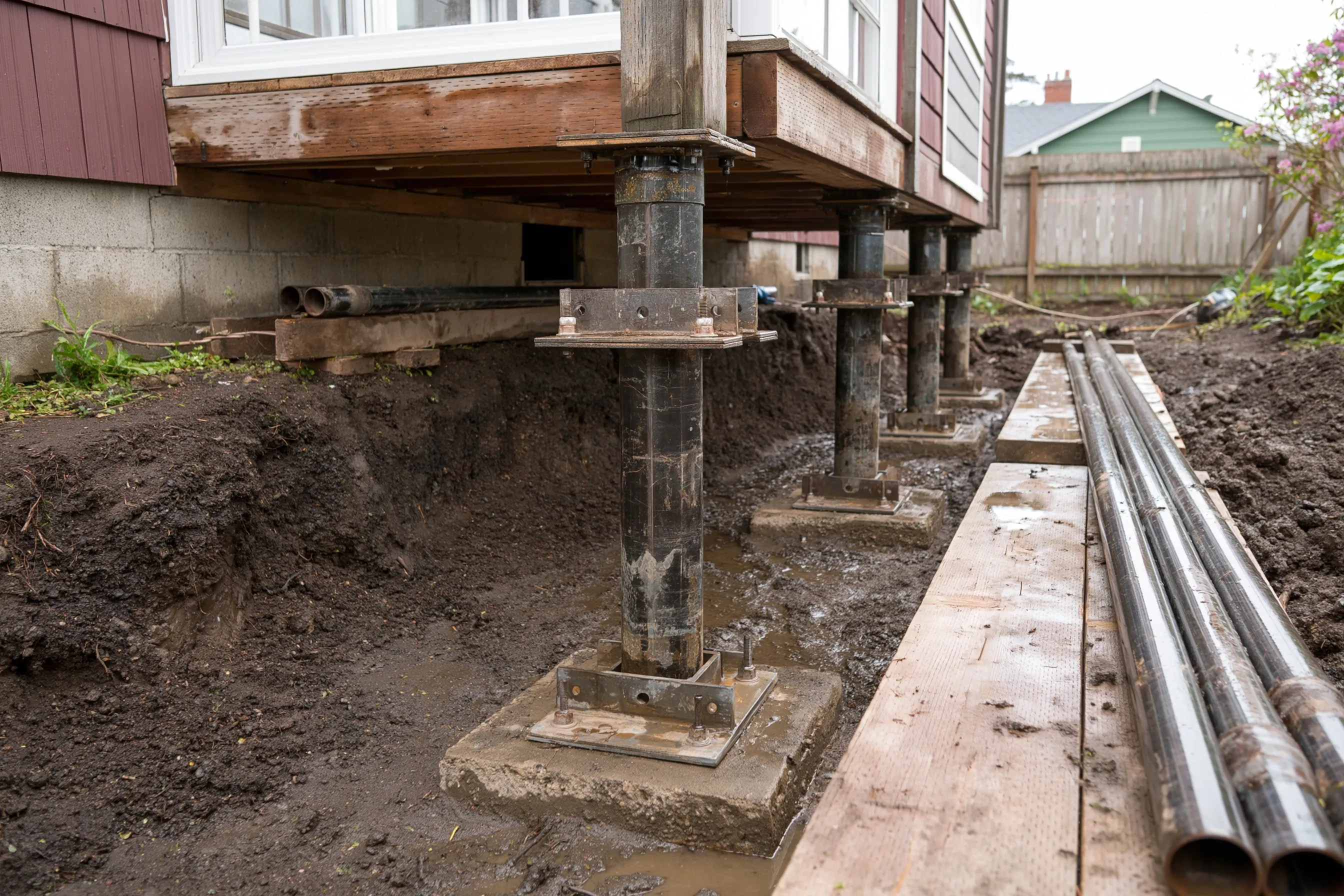
HUD cautions that a mini-pier used wrongly can crack the foundation and slab, and that it is economical only where a bearing layer is relatively near grade. The pier itself is a 2 to 8 inch steel pipe, driven hydraulically beside the footing to rock or adequate bearing strata, with the weight of the building supplying the resistance.
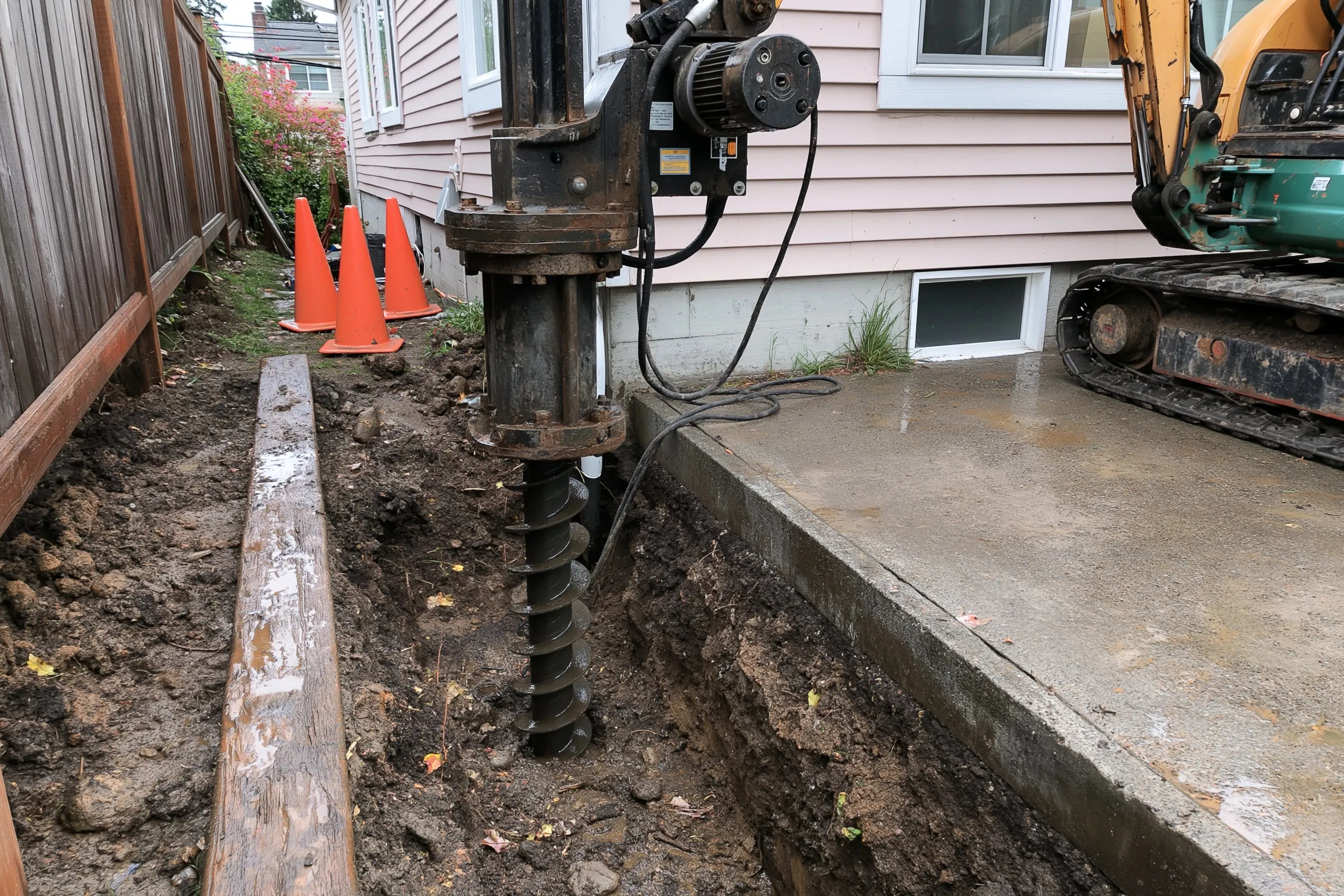
A helical pier is a steel shaft carrying helical plates that is turned into stable soil and connected to the footing with a bracket. Per HUD, it fails where soils have limited bearing capacity, and the torque needed to install it can be measured to find out the capacity actually achieved. The soil investigation informs which system suits the ground.
Neither system is promised to raise a house. For augered reinforced concrete piers, HUD says lifting a foundation more than a few inches is hard in sandy soils. Settlement repair here means putting a footing on better ground, and whether any lift is possible is for the engineer and the soil to say.
Engineers, permits and hazard areas
HUD wants the cause of settlement examined by a structural or geotechnical engineer, repairs carried out by experienced contractors directed by a professional engineer, and any underpinning by footing enlargement designed by an engineer. Those are federal recommendations, not Sammamish rules.
Foundation repair is not among the exempt examples on the regional MyBuildingPermit tip sheet, which lists Sammamish as a participating city, so treat a permit as a question to settle with the Permit Center. The city’s summary sheet describes seismic hazard areas as susceptible to liquefaction on the King County map and says development proposals in them must include a geotechnical report. WAC 365-190-120 describes settlement and liquefaction as occurring in low-density cohesionless soils, usually with a shallow water table. Ask the Permit Center what applies at your address.
Water and settlement
Washing fines out from beneath a foundation reduces soil cohesion and causes settlement, HUD says. Piers set in soil that keeps eroding can leave the problem in place, which is why the foundation drainage page matters here.
What changes the cost
Piering is priced from the ground and the house, and the factors are:
- The number of piers needed and the depth to ground that can carry them
- Helical or push system, which follows the soil
- Access for equipment along the foundation: slope, decks, landscaping and driveways
- An engineer’s report and any hazard-area review before work
- Interior work if floors, drywall or finishes have to be opened
- Permits and inspections
Cracks that formed as the footing moved are dealt with on the foundation crack repair page, while soil that keeps washing away from the footing is a foundation drainage matter. The Sammamish Foundation Repair home page puts the four services in one place.