Crawlspace Post and Beam Repair in Sammamish

Typical cost in Sammamish

  • Replace one post$350 – $850+
  • Three to five posts$1,800 – $5,500+
  • New beam and posts under one room$3,000 – $9,000+

A bouncing, sagging or sloping floor above a crawlspace can point to the framing underneath: a post that sank, a girder that bowed or wood softened by damp. Sammamish Foundation Repair inspects the supports below the floor and the moisture that may have damaged them.

Not every house has a crawlspace, so this page is for those that do. Sammamish, Issaquah and Fall City are covered. About 13 percent of Sammamish homes predate 1980, which makes the supports here newer than in an older neighborhood.

Request a free quote
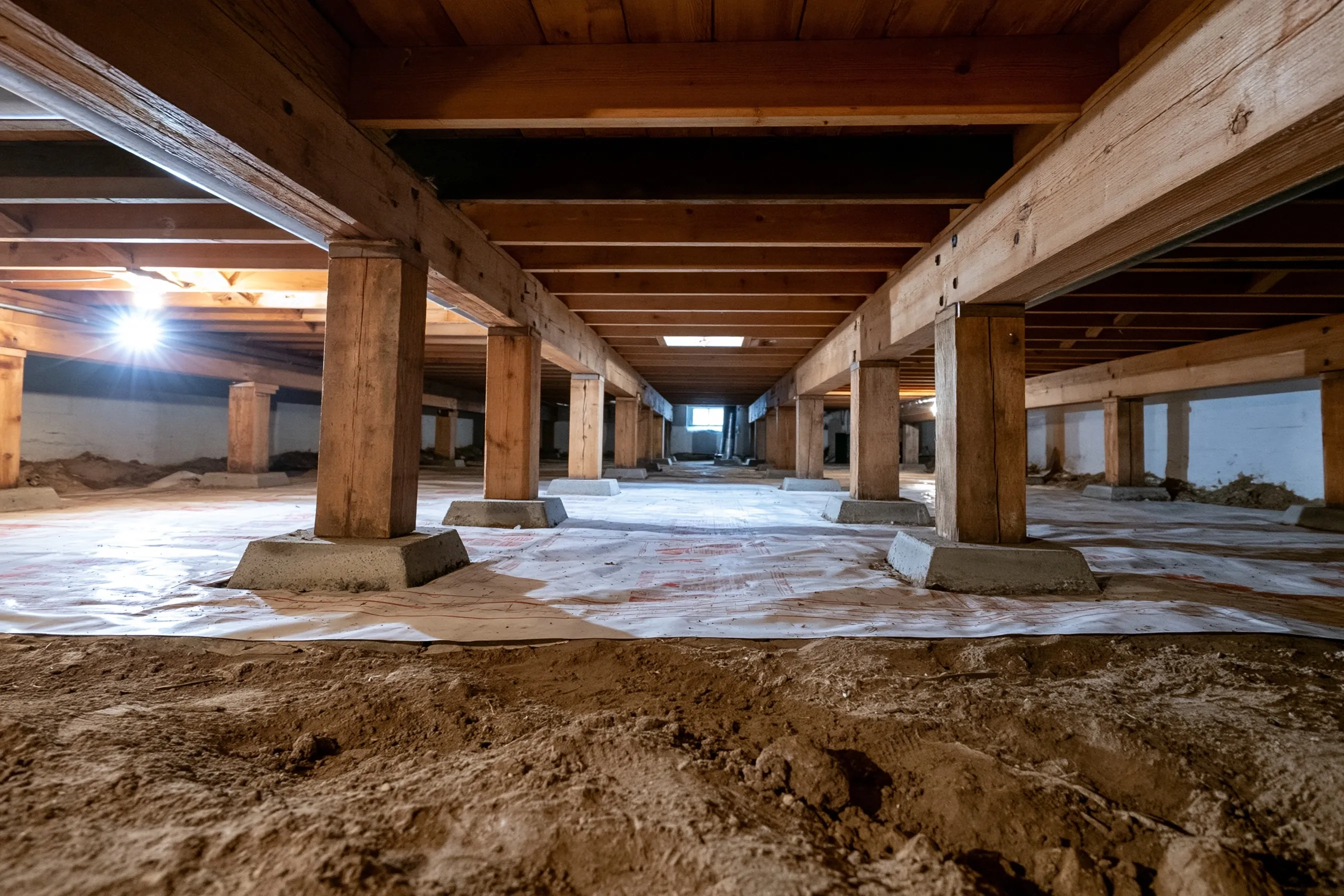
Low-angle view inside a residential crawlspace under a Pacific Northwest house: a row of timber posts on concrete pads holding wood girders and floor joists, bare soil partly covered by a vapor barrier, lit by a flashlight beam

Floors that sag or bounce

What a sagging floor points to

A floor that slopes, bounces or squeaks can come from a post that has sunk into its pad or the soil, a girder that has sagged between posts, joists that have lost their support or a sill plate that has decayed. A look under the house shows which of these applies, and several can apply together.

Why it matters

The supports under a floor carry its weight to the ground, and a floor that has moved can crack finishes upstairs and stress the walls above it. The repair aims to restore support and does not guarantee a level floor, and how far a floor can be corrected depends on what the framing allows.

Where to start

If you can reach the crawlspace safely, check it with a flashlight for standing water, damp soil, soft wood and posts that lean or have moved off their pads. Take photographs before you send them over.

Posts, pads, girders and sills

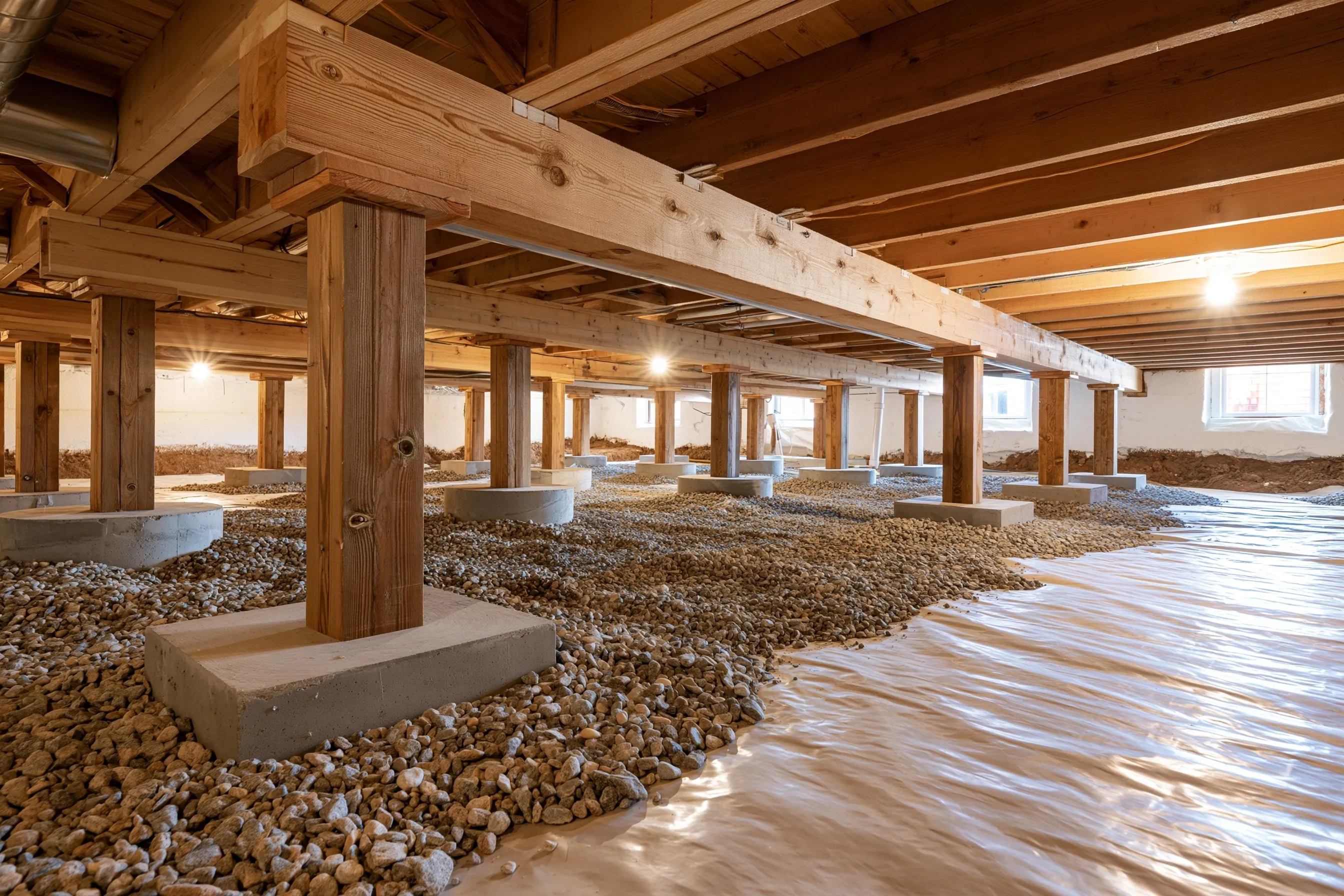
Posts stand on pads or footings and hold the girders, which carry the floor joists. A new post on a new concrete pad, set under a straightened girder, is one shape the repair can take, and joists or girders that are damaged may need replacing or reinforcing.

The sill plate is the lumber resting on the foundation wall that carries the framing above it. Each sill scope is written for the house, and an engineer may be involved where structure is affected.

Moisture under the house

The USDA Forest Service decay manual states that damp wood, if it stays damp for any length of time, becomes infected with decay fungi and loses weight and strength. New posts set in a crawlspace that stays wet meet the same damp, so the job includes the source of the water.

In both vented and unvented crawlspaces, Building America calls for heavy polyethylene ground cover sealed to the walls and piers, and it counts grading and perimeter drainage among the sources of bulk water. Here ground cover is a moisture measure inside the repair, not a service of its own. For water outside, see the foundation drainage page.

Working in a low crawlspace

Low headroom, damp soil and a tight hatch shape the job. Low crawlspaces are generally worked by hand, with the floor supported while posts or girders are replaced.

A crawlspace repair that replaces or alters structural members is a permit question. The regional tip sheet says a permit is required for work not on its exempt list. Ask the Permit Center about your address.

What changes the cost

The amount of work under a floor varies a lot, and the price follows what is found:

  • How many posts and pads need replacing
  • Whether girders, joists or sill plates are damaged and by how much
  • Headroom and access to the crawlspace
  • How wet the space is, and whether drainage or ground cover is needed
  • An engineer’s report if the structure is affected
  • Permits and inspections
Inside a residential crawlspace: new pressure-treated posts on fresh concrete pads supporting a straight wood girder under floor joists, clean gravel and a vapor barrier on the ground

Questions and answers

Why does my floor bounce?

A sunken post, a bowed girder or joists that have lost bearing are possible causes. Looking under the house, not standing on the floor above, shows which.

Can a sagging floor be leveled?

This site does not promise a level floor. Support may be restorable, depending on the framing, and how far a floor can be corrected depends on the framing and the finishes above it.

Do I need a vapor barrier in my crawlspace?

Building America guidance says a sealed polyethylene ground cover should be installed in both vented and unvented crawlspaces. Ask the Permit Center whether a permit applies to your address.

Soft framing under the house points toward a wet crawlspace, which the foundation drainage page addresses. A foundation that has moved is on the settlement and piering page. The Sammamish Foundation Repair home page lists the rest.

Request a free foundation repair quote

Tell us whether the floor bounces or slopes, where in the house, and whether you have looked into the crawlspace. We'll get back to you soon with an estimate or any questions we have. Estimates are free and there's no obligation.

Call (425) 642-1026

Call (425) 642-1026