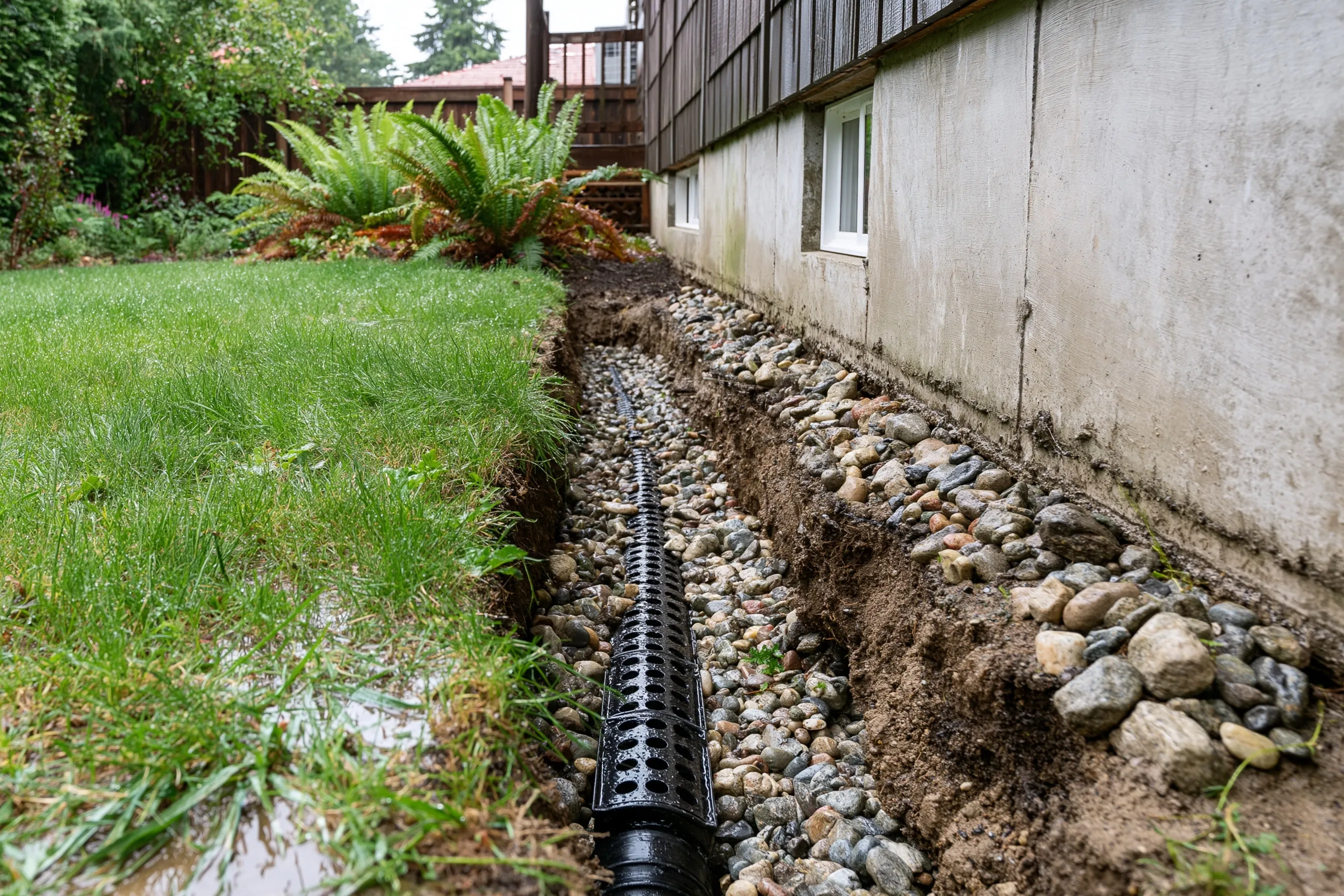
An outside footing drain is perforated pipe in washed gravel at footing depth, installed by trenching along the wall. It moves water off the base of the foundation, and the trench disturbs anything above it, such as beds, walks or a deck.
An interior drain works from inside: a channel is opened at the base of the wall, a perforated pipe is bedded in gravel and the water is led to a sump basin. It suits a basement or crawlspace that can be opened up and a house where digging outside is impractical. Which one fits depends on where the water enters and what is reachable; this page does not promise that any drain will leave a space dry.
Gutters, downspouts and grading
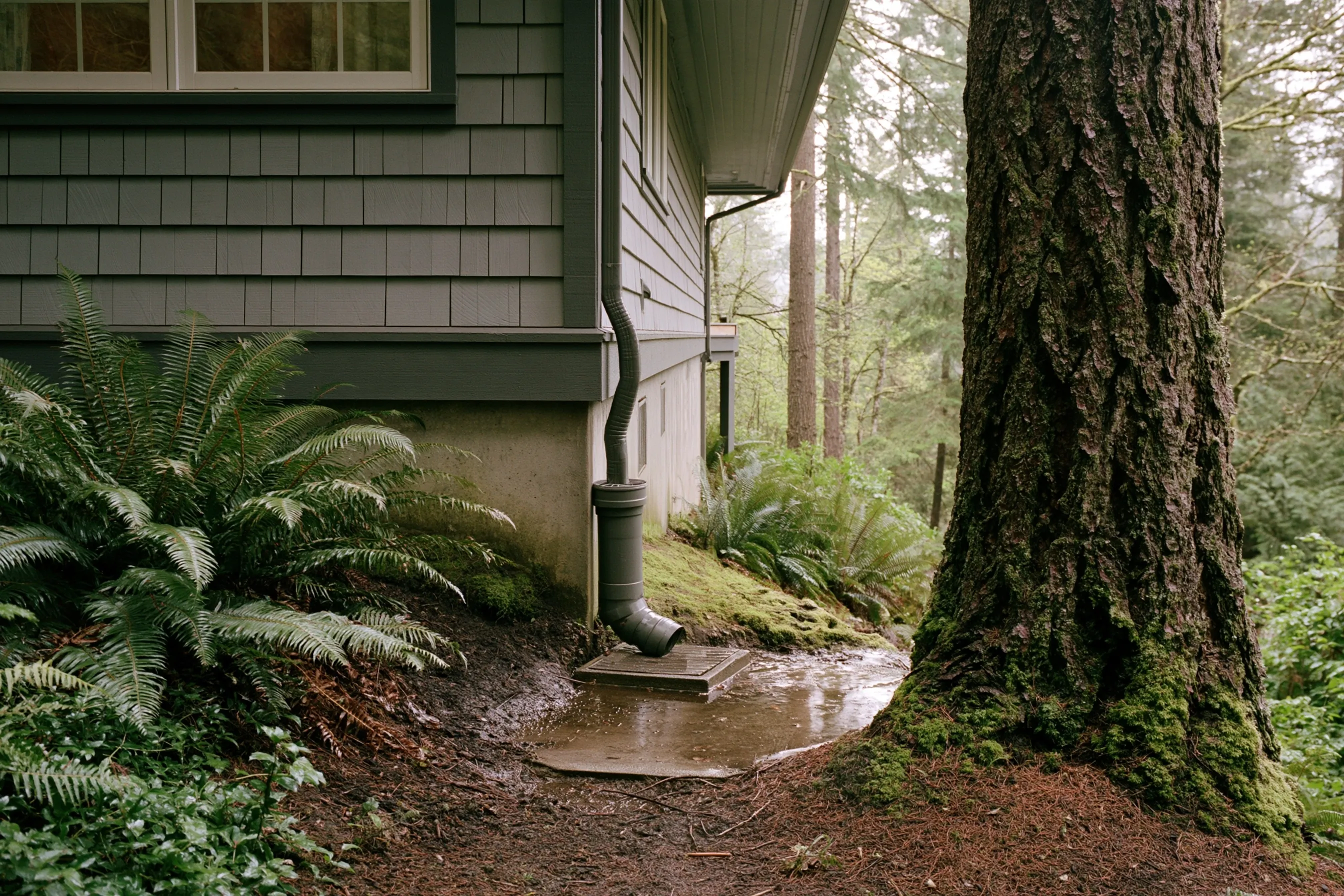
Often the first and lowest-cost step to check. Extending a downspout, re-forming the ground to fall away from the wall and sorting out where the line ends can change how much water reaches the foundation before any digging is considered.
Building America guidance for vented crawlspaces calls bulk water the dominant moisture source and ties it to improper site grading and missing perimeter drainage. The crawlspace post and beam repair page picks up what such water does to framing.
Permits near hazard areas
A trench along a foundation moves soil, so ask the Permit Center whether grading rules apply to your address.
The city’s summary sheet says that for erosion hazard areas, regulations limit work during the Wet Season to keep sediment from leaving the site. It also describes an overlay for sloped areas that drain directly to Lake Sammamish. Retaining walls and rockeries are outside this service: the regional tip sheet lists a wall under 4 feet carrying no surcharge as not needing a building permit, and anything taller or carrying a load is a separate question.
What changes the cost
Drainage work ranges from a downspout extension to a full footing drain, so the factors matter more than any average:
- Whether the problem is roof water, grade, or water in the ground
- Length of wall to be drained, and how deep the footing sits
- What is on top of the trench: lawn, planting beds, a deck, a patio or a driveway
- Inside or outside work, and whether a sump basin and discharge line are needed
- Where the water can be sent, which depends on the lot and its slope
- Permits and any hazard-area review
Two other pages pick up where water leaves off: foundation crack repair deals with walls that have split, and crawlspace post and beam repair with floors that have dropped, and a wet footing may sit behind either one. All four services sit side by side on the Sammamish Foundation Repair home page.